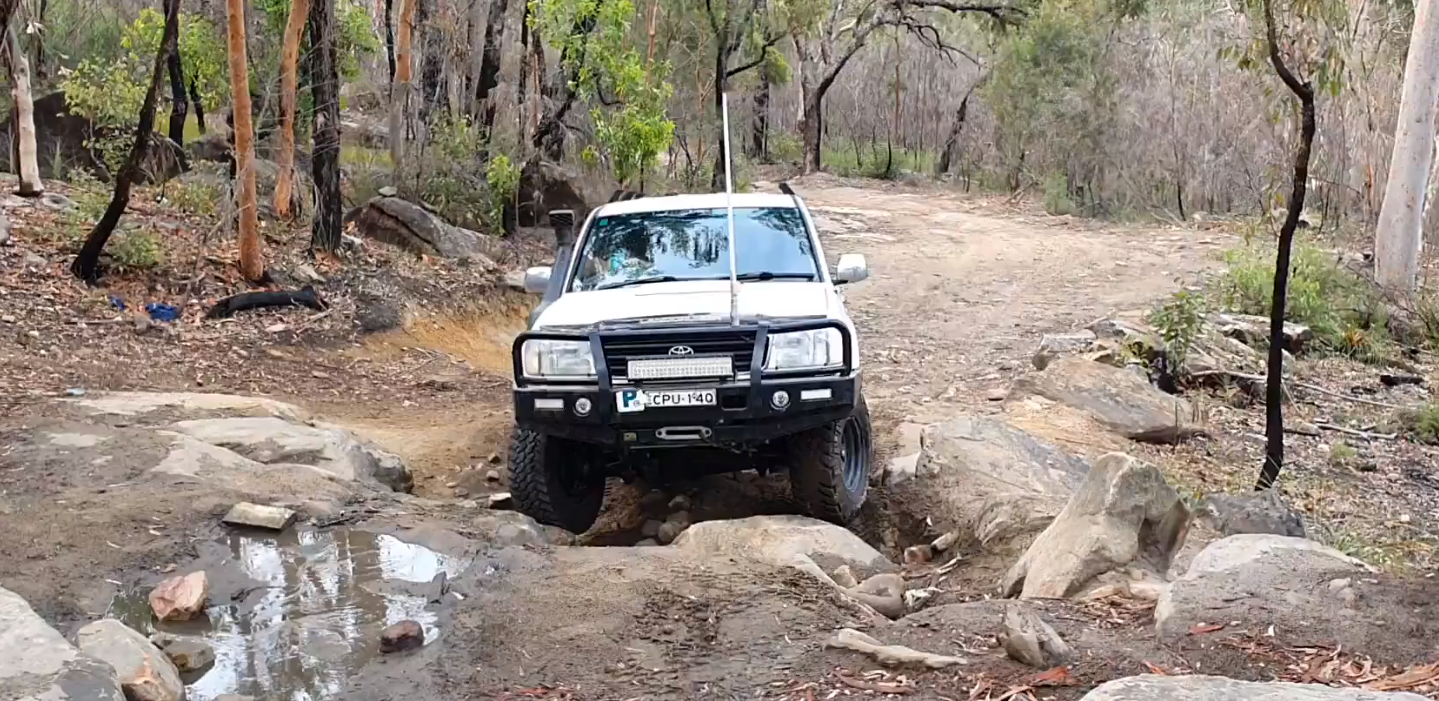
Landcruiser Front End Rebuild and Strengthening
One of my more ambitious undertakings, in this project I completely stripped down the front axle housing, hubs and brakes, and rebuilt it with better, stronger components and design modifications, after years of abuse and testing, none of these components have failed to this day, with the added benefit of improved drivability.
The catalyst for this venture was a common weak point on older, more rough handled Toyota LandCruiser 105 and 80 series' with low quality, hard polyurethane bushes, as my research uncovered. This resulted in the mounting bracket which secures the radius arm to the diff housing to completely sheer off between the housing and the rear-most mounting bolt.
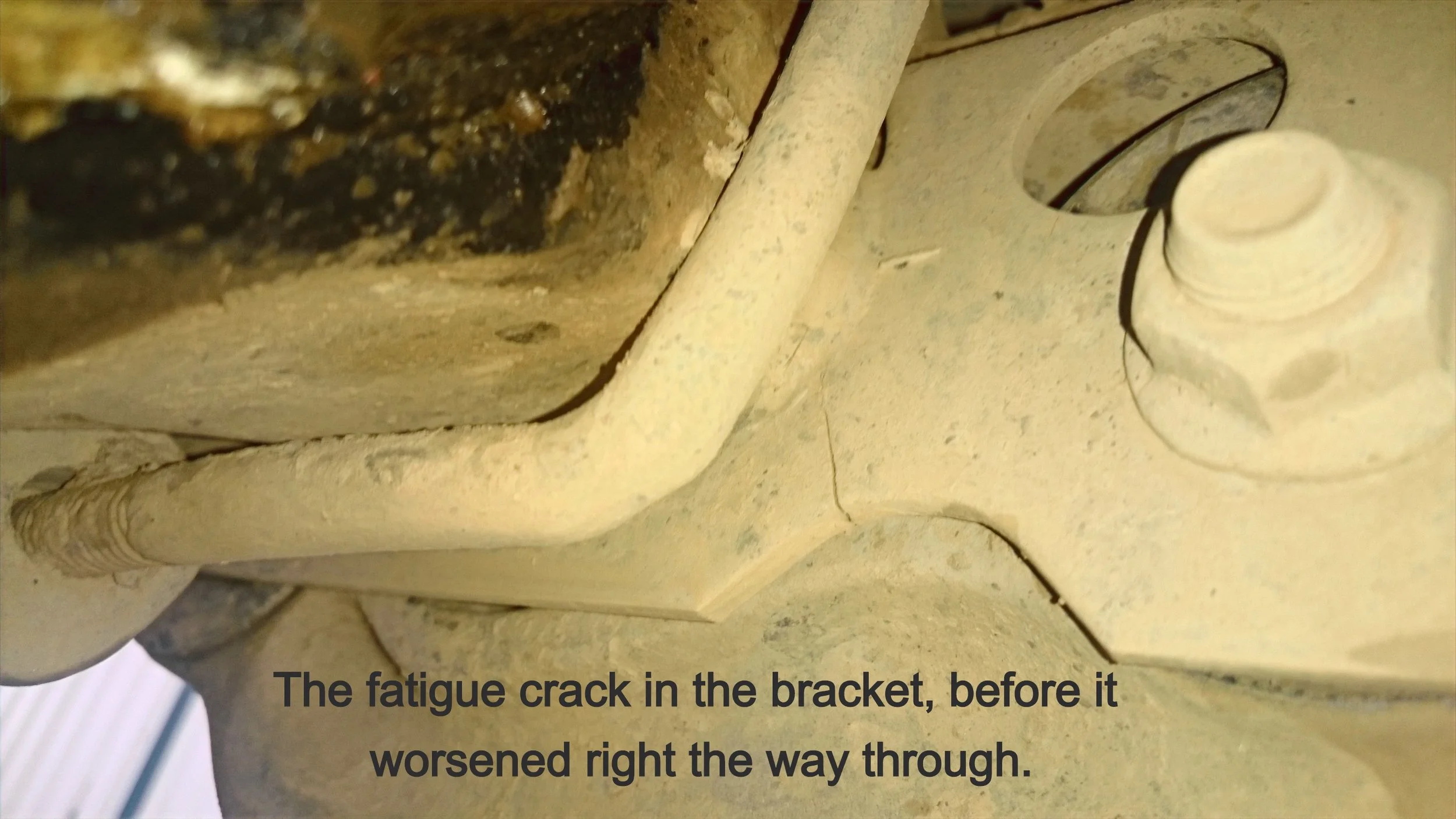
Unfortunately, I was not equipped for welding or advanced steel fabrication at the time, thus leaving no option but to outsource these tasks. After consulting different fabrication companies, the welding was completed, and I prepped, etched and painted the housing, completed the 10mm stud upgrade, then began the rebuild process. New air locker seals, new swivel hub bearings and seals, new CV and axles (old ones were quite worn on their sealing surface, and the CVs were of unknown aftermarket origin, cheap aftermarket CVs being another common weakspot for landcruisers), new slotted, high quality brake rotors, repacked wheel bearings and a few new bushes resulted in a greatly improved final product.
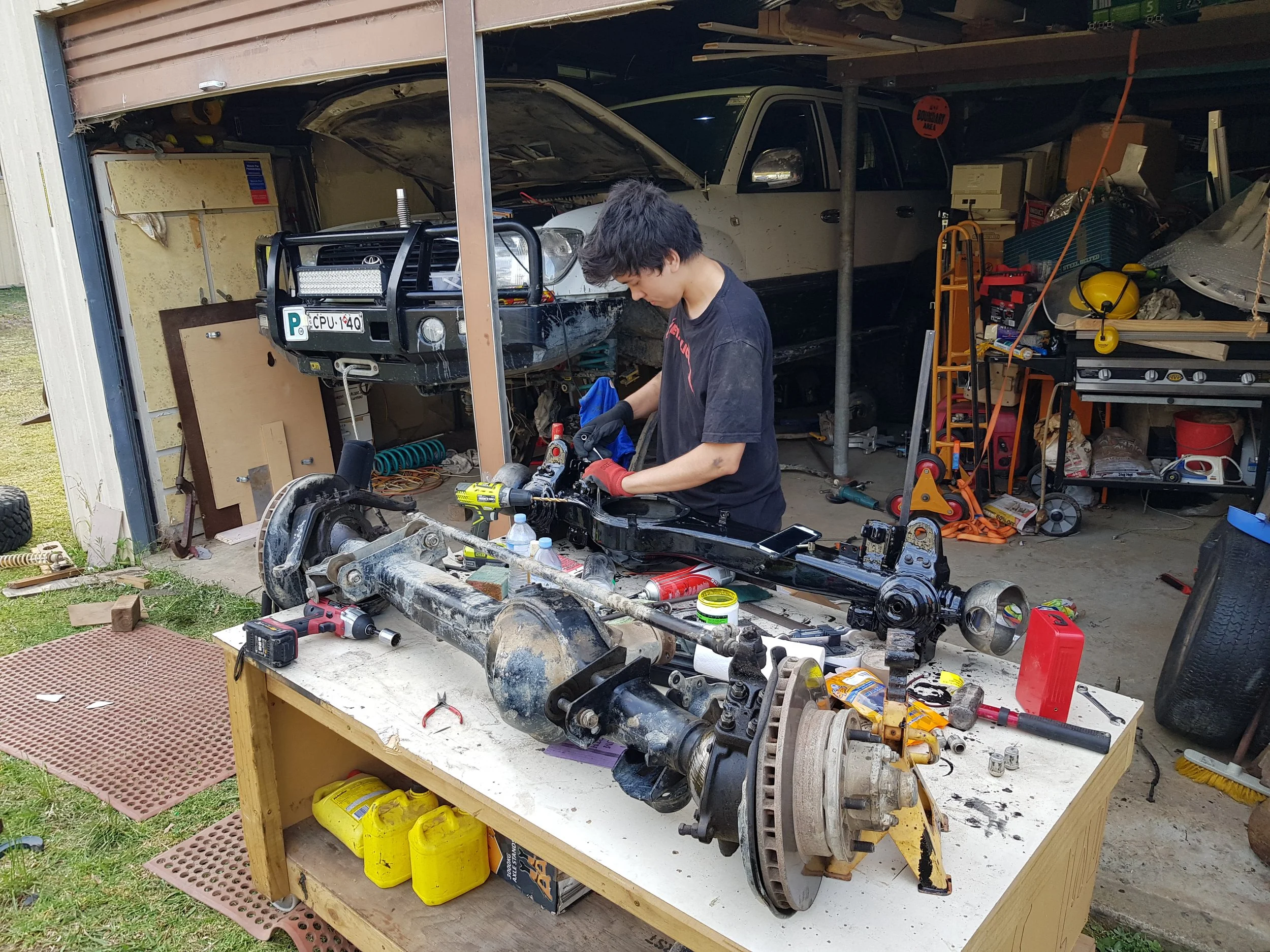
Thanks to this research, I had a fair idea on what was needed to ensure this problem did not occur again. This involved strengthening the mounting bracket by laminating it with 4mm plate, as well as triangular gussets to brace completely against any torsional flex in the metal. Due to the scale of the task, I also decided to go ahead with making a few more improvements to the diff housing to ensure wouldn't have any problems with it in the future. These improvements included bracing the housing itself from bending as a result of an impact, and upgrading the third member studs from 8 to 10mm, as with age and strong torsional loads, the third member will sometimes break its seal, resulting in a leak, or worse: damage to the differential itself.